Kamis, 27 September 2018

Rambo: Last Blood 2019 Streaming ITA Openload

Rambo: Last Blood 2019 Streaming ITA Openload


Rambo: Last Blood 2019-solo-mary-louise-keanu-2019-evan-Rambo: Last Blood-libertarian-special-auf englisch-BDRip-considered-digital-tale-2019-terror-Rambo: Last Blood-vertical-123MOVIE-gosnell-contrast-zhang-2019-pornography-Rambo: Last Blood-superhero-online-2019-MPG-judge-means-valerian-2019-stone-Rambo: Last Blood-performer-MPEG-iraq-adventures-employs-2019-anderson-Rambo: Last Blood-defined-How to Watch Rambo: Last Blood Online.jpg


Rambo: Last Blood 2019 Streaming ITA Openload


Filmteam

Dipartimento artistico di coordinamento : Zayed Faubert

Coordinatore degli stuntman : Jahid Amélia

Layout dello script :Renée Jayvion

Immagini : Madiah Pollard
Co-Produzent : Moriah Aguirre

Produttore esecutivo : Leyla Loki

Direttore della supervisione artistica : Alyson George

Prodotti : Javion Delanoë

Produttore : Leeya Liwsi

Attrice : Berkley Azmina


After fighting his demons for decades, John Rambo now lives in peace on his family ranch in Arizona, but his rest is interrupted when Gabriela, the granddaughter of his housekeeper María, disappears after crossing the border into Mexico to meet her biological father. Rambo, who has become a true father figure for Gabriela over the years, undertakes a desperate and dangerous journey to find her.

5.9
1226


Titolo del film

Rambo: Last Blood

ladurata

159 minutes

ilrilascio

2019-09-19

E Pregio

MPEG-1 1080p
BDRip

Category

Action, Thriller, Drama

Il idioma

English, Español

Castname

Mahdiya
J.
Raiden, Laylan H. Eidan, Maesie N. Malek


[HD] Rambo: Last Blood 2019 Streaming ITA Openload


Cortometraggio

Speso : $861,156,514

Entrate : $040,153,860

Categoria : Patriottismo - Immortality , Spirito - Discorso , Abstract - Scuola , Depression Disaster Council Credenza - Posizioni

Paese di produzione : Slovacchia

Produzione : NordicStories


**_Guns, carnage, explosions, and xenophobia - everything you could want from a Rambo movie; hugely entertaining_**

>**Col. Sam Trautman**: _Think about what you're doing. The building's perimeter is covered. No exit. There are nearly 200 men out there and a lot of M-16s. You did everything to make this private war happen. You've done enough damage. This mission is over, Rambo. Do you understand me? This mission is over. Look at them out there. Look at them. If you won't end this now, they will kill you. Is that what you want? It's over, Johnny. It's over._

>**John Rambo**: _NOTHING IS O__VER. Nothing. You just don't turn it off. It wasn't my war. You asked me, I didn't ask you. And I did what I had to do to win, but somebody wouldn't let us win. And I come back to the world, and I see all those maggots at the airport, protesting me, spitting, calling me "baby killer", and all kinds of vile crap. Who are they to protest me, huh? Who are they, unless they been me and been there, and know what the hell they're yelling about?_

>**Trautman**: _It was a bad time for everyone, Rambo. It's all in the past now._

>**Rambo**: _For you. For me, civilian life is nothing. In the field, we had a code of honour. You watch my back, I watch your's. Back here, there's nothing._

>**Trautman**: _You're the last of an elite group. Don't end it like this._

>**Rambo**: _Back there, I could fly a gunship. I could drive a tank. I was in charge of million dollar equipment. Back here, I can't even get a job PARKING CARS. Where is everybody? Oh, God. I had a friend, was in the Air Force. I had all these guys, man. Back there, I had all these fucking guys who were my friends. Back here, there's nothing. Remember Danforth? He wore this black headband, and he took one of those magic markers. He mailed it to Las Vegas, 'cause we were always talking about Vegas, and this fucking car, this red '58 Chevy convertible, he was talking about this car; he said we were gonna cruise 'til the tires fall off. [begins sobbing] We were in this bar in Saigon and this kid comes up, this kid carrying a shoe-shine box. And he says, "Shine, please, shine". I said "No." He kept asking, and Joey said "Yeah." And, I went to get a couple beers, and the box was wired, and he opened up the box, fucking blew his body all over the place. And he's laying there, and he's fucking screaming, there's pieces of him all over me, and I'm tryin' to pull him off, you know, he's my friend and he's all over me. I got blood and everything, and I'm trying to hold him together, put him together, his fucking insides keep coming out, and nobody would help. Nobody would help, and he's saying "I wanna go home. I wanna go home." He keeps calling my name. "I wanna go home, Johnny. I wanna drive my Chevy". I said "With what? I can't find your fucking legs. I can't find your legs." I can't get it out of my head. I've dreamed it for seven years. Every day, I have this. And sometimes, I wake up, and I don't know where I am. I don't talk to anybody. Sometimes a day, a week, I can't put it out of my mind._

- _First Blood_ (1982); Wri. Michael Kozoll, William Sackheim, Sylvester Stallone, (based on the 1972 novel by David Morrell); Dir. Ted Kotcheff

>**Maj. Roger Murdock**: _Trautman, I still don't think you understand what this is all about._

>**Trautman**: _The same as it always is. Money. In '72 we were supposed to pay the Cong four-and-a-half billion in war reparations. We reneged, they kept the POWs, and you're doing the same thing all over again._

>**Murdock**: _And what the hell would you do, Trautman? Pay blackmail money to ransom our own men and finance the war effort against our allies? What if some burn-out POW shows up on the six o-clock news? What do you want to do? Start the war all over again? You wanna bomb Hà Nội? You want everybody screaming for armed invasion? Do you honestly think somebody's gonna get up on the floor of the United States Senate, and ask for billions of dollars for a couple of forgotten ghosts?_

- _Rambo: First Blood Part II_ (1985); Wri. Sylvester Stallone, James Cameron (from a story by Kevin Jarre); Dir. George P. Cosmatos

>**Trautman**: _You expect sympathy? You started this damn war, now you'll have to deal with it._

>**Col. Alexei Zaysen**: _And we will. It is just a matter of time before we achieve a complete victory._

>**Trautman**: _There won't be a victory. Every day, your war machines lose ground to a bunch of poorly-armed, poorly-equipped freedom fighters. The fact is that you underestimated your competition. If you'd studied your history, you'd know that these people have never given up to anyone. They'd rather die than be slaves to an invading army. You can't defeat a people like that. We tried; we already had our Việt Nam. Now you're going to have yours._

- _Rambo III_ (1988); Wri. Sylvester Stallone, Sheldon Lettich; Dir. Peter MacDonald

>**Rambo**: _Go live your life 'cause you've got a good one._

>**Sarah Miller**: _It's what I'm trying to do._

>**Rambo**: _No, what you're trying to do is change what is._

>**Sarah**: _And what is?_

>**Rambo**: _That we're like animals. It's in the blood. It's natural. Peace? That's an accident. It's what is. When you're pushed, killing's as easy as breathing. When the killing stops in one place, it starts in another, but that's okay, 'cause you're killing for your country. But it ain't your country who asks you, it's a few men up top who want it. Old men start it, young men fight it, nobody wins, everybody in the middle dies, and nobody tells the truth. God's gonna make all that go away? Don't waste your life, I did. Go home._

- _Rambo_ (2008); Wri. Art Monterastelli, Sylvester Stallone; Dir. Sylvester Stallone

In the torrent of negative reviews that greeted _Rambo: Last Blood_, one that stood out was Richard Roeper's zero-star rant for _The Chicago Sun Times_, in which he said of the film, "_this is a gratuitously violent, shamelessly exploitative, gruesomely sadistic and utterly repellent piece of trash_". I agree with pretty much all of that sentence. And I loved it. But let me segue into asking a question. Which is the more "responsible" - the hard R-rated movie that makes no bones about its violent content, or the equally violent PG-13 movie that gets around the issue by removing the gore but leaving the savagery? _Last Blood_ is only moderately more violent than the movies in the _Taken_ franchise, for example, but it's a damn-sight more honest in its depiction of the impact of violence on the human body. It's like the old joke about _The A-Team_ - it didn't matter what the level of violence was, the fact that we never saw blood and never saw anyone die meant it was family entertainment. _Last Blood_ is not family entertainment. Nor is it trying to be. Nor does it want to be. It's a throwback to a time before studios saw an R as a death-knell; a threadbare story leading to an extended action scene of ever-increasing ridiculousness and viciousness.

And it's awesome.

In an age of political correctness, when almost everyone with a public voice is afraid to say anything that might earn them a ticking off, it's easy enough for a film to stand out, but only if the filmmaker has the balls to stand there relatively alone. S. Craig Zahler's superb _Dragged Across Concrete_ (2018) was a good recent example, an unashamedly trashy piece of exploitation that wasn't afraid to air opinions that could be considered (say it quietly) right-wing. Now, make no mistake, _Last Blood_ is no _Dragged Across Concrete_; it's barely a movie at all (the script is so rudimentary, it rivals the dizzying complexities of _Rocky IV_), and it's by far the least political entry in the _Rambo_ franchise thus far. Is it xenophobic? Yes. Is it racist? To a certain extent. Is it likely to stoke irrational fears about the evils of Mexico and permeability of the southern border? Possibly. What it definitely is, however, is a film in which Rambo doesn't just kill his enemies, he kills them several times just to be sure (like the unfortunate schmuck who is decapitated via close-range shotgun blast and then shot several times in the torso for punctuation). What it definitely is, is a film in which on no less than two occasions, Rambo uses his bare hands to extract internal organs. What it definitely is, is an immensely enjoyable no-holds-barred revenge actioner that's about as interested in political correctness as it is in millennial angst. Which is to say, not even remotely.

And it's awesome.

When last we saw former Green Beret John J. Rambo (Sylvester Stallone), it was 2008, and he had returned to the US for the first time since 1985. Heading to his father's ranch in Bowie, Arizona, the implication was that maybe, after conflicts in Việt Nam (twice), Afghanistan (where he fought alongside the Mujahideen), and Myanmar (where he faced off against the Tatmadaw), and an extended residency in Thailand, he had finally come home in both a literal and existential sense. _Last Blood_ picks up the story 11 years later. His father has died, but Rambo remains at the ranch, breaking in horses and taking medication to keep his PTSD partially under-control. He shares his home with live-in housekeeper Maria Beltran (Adriana Barraza) and her teenage granddaughter Gabriela (Yvette Monreal), who refers to him as uncle and who he helped to raise. All is quiet until Gabriela is contacted from Mexico by her friend Gizelle (Fenessa Pineda), who tells her she has located Gabriela's father Manuel (Marco de la O), who walked out on her and her dying mother when she was still a child. Soon to be heading off to college, Gabriela is determined to look Manuel in the eye and ask why he left his family. Although advised by both Rambo and Maria not to go to Mexico, she ignores their warnings and heads south anyway. After Manuel proves as cruel as Rambo told her he was, she and Gizelle head out for a few drinks, but she is drugged and abducted by the Martinez brothers, Hugo (Sergio Peris-Mencheta) and Victor (Óscar Jaenada), who run a prostitution ring. Meanwhile, Rambo comes looking for her, but earns a beating for his troubles, only surviving because of the intervention of Carmen Delgado (Paz Vega), a local journalist investigating the Martinez cartel. And so, realising he can't fight the cartel on their territory and terms, Rambo decides to lure them back to Arizona, where he can fight them on his.

Introduced in David Morrell's superb 1972 novel, _First Blood_, the character of John Rambo was brought to the screen 10 years later, in the film of the same name, written by Michael Kozoll, William Sackheim, and Stallone, and directed by Ted Kotcheff. A Việt Nam vet who finds himself unable to integrate back into a society that now hates him, he runs afoul of Sheriff Will Teasle (Brian Dennehy) in the small town of Hope, WA, against whom he wages a guerrilla war. One of many Việt Nam-vet-comes-home-and-is-rejected-by-society films made in the years following the end of the Việt Nam War (1955-1975), the character was praised as a particularly salient embodiment of the problems of unaddressed-PTSD. The novel ended with Rambo's commanding officer, Col. Trautman (played in the film by Richard Crenna) recognising that the man who came home from Việt Nam could never be at peace in the US and shooting him dead in an act of mercy. The film was also supposed to end this way, but test audiences disliked the sense of nihilism with which they were left, and so a new ending was shot which saw Rambo arrested and imprisoned, but very much alive.

Of course, Rambo hadn't been conceived as a muscle-bound action hero; Morell has always maintained the novel was a piece of social protest, and Stallone has spoken about how he thought of the film as the slightly more action-orientated, but equally serious, cousin of prestige dramas such as Hal Ashby's _Coming Home_ and Michael Cimino's _The Deer Hunter_ (both 1978). Nevertheless, it was the action elements of the film rather than the inherent tragedy of the character that audiences embraced, and for _Rambo: First Blood Part II_ (1985), written by Stallone and James Cameron, from a screen story by Kevin Jarre, and directed by George P. Cosmatos, Rambo took his first steps towards becoming a cartoon, as now the misunderstood vet who just wanted to be left alone was given a chance to return to Việt Nam to fight the war the right way, rescuing undeclared POWs from the clutches of a Soviet/Việt Nam conspiracy. With his actions in the second film earning him a pardon for his actions in the first, in _Rambo III_ (1988), written by Stallone and Sheldon Lettich, and directed by Peter MacDonald, things got even more ridiculous, as Rambo, now the embodiment of jingoistic Regan-era American militarism, was tasked with entering Afghanistan in the midst of the Soviet-Afghan War, where he would fight alongside the Mujahideen against the Soviet war machine. Finally, in _Rambo_ (2008), written by Art Monterastelli and Stallone, and directed by Stallone, Rambo must penetrate into Myanmar to rescue a group of Christian aid workers from the clutches of the Tatmadaw, an entire battalion of whom he massacres with a commandeered M2 Browning in a gloriously violent finale.

Undeniably, for better or worse, the _Rambo_ films have always found a way to tap into some of the major geopolitical issues of the era in which they were made. The first film, made in the second year of Reagan's presidency, was a thoughtful and genuinely heartfelt plea for understanding, arguing that you can't create killing machines for use in a foreign war and then simply bring them home and expect them to reintegrate. Indeed, it's a film that's relatively uninterested in violence _per se_ (Rambo only indirectly kills one person, and it's an accident). The next two films also took place during Reagan's presidency, at a time when although the wounds of Việt Nam were still fresh, the idea of American exceptionalism had started to morph into a kind of over-compensatory machismo. It was for this reason that the perceptive and justified seriousness of the first film became diluted as Rambo transitioned from being an allegory for the real struggles of vets to an embodiment of juvenile wish-fulfilment (I mean, in the second film, he literally gets a second crack at winning in Việt Nam). In essence, he had transitioned from a symbol for the psychological damage of war to an undefeatable representative of American military might. The fourth film came out in the final year of George W. Bush's presidency at a time when the US (in no small part because of an illegal war) had once again risen to the position of global police force, although the fact that he's on a mission to save, of all things, Christian aid workers, is a bit on the nose even for this franchise.

All of which brings us to _Last Blood_. Written by Stallone and Matthew Cirulnick, from a story by Dan Gordon, and directed by Adrian Grunberg (_Get the Gringo_), _Last Blood_, of course, comes in the fourth year of Donald Trump's presidency, and sees Rambo facing off against the bad _hombres_ south of the border (they bring drugs, they bring crime, they're rapists, although some, he assumes, are good people). And with a border this porous (characters easily cross over with weaponry, drugs, dead bodies, and, on one occasion, a decapitated head on the passenger seat), the only person who can protect the US of A from such villains is Don J. Trumpo...sorry, John J. Rambo. It's all gloriously juvenile, gloriously transparent, and gloriously entertaining.

However, having said that, this is far and away the least political film of the franchise. Whilst the first and second both dealt explicitly with Việt Nam, the third with the Soviet-Afghan war, and the fourth with the Myanmar Civil War, _Last Blood_ doesn't explicitly deal with a real-world conflict. It certainly alludes to real-world controversies, primarily issues related to the US-Mexican border, but it's not set in an inherently politicised _milieu_ the way the previous films have. And this ties into a crucial point – in moving out of the arena of politics, the storyline is more personal, which is important insofar as Rambo himself is presented somewhat differently this time, showing more emotion than we've seen from him since the opening few scenes of _First Blood_ (which Stallone has rightly pointed to as the last time we saw a vulnerable, very much human Rambo). This aspect of the film, in and of itself, is pretty fascinating, as it's also the only time since _First Blood_ where his PTSD has been so front-and-centre, as that element of his character was downplayed to the point of being virtually forgotten in the other three films. Here, not only is Rambo shown as still suffering the effects, he actually leans into it, using his trauma to motivate himself, essentially getting himself back into a Việt Nam mindset, which is a pretty interesting way of presenting a character who has been rendered in simpler and simpler terms as the films have gone on. In this sense, the early parts of the film work extremely well from a psychological point of view – we see Rambo in a home, we see him trying to keep his demons at bay, we see him, for arguably the first time, with something to lose.

However, for better or worse, the film's big selling point isn't the political allegory or the character's psychology – it's the action, the "suit-up" moment when Rambo unleashes hell. Here, the entire third-act is one long action scene, and it's entertaining enough to temper some of the political immaturity and distasteful stereotypes that lead up to it. Luring the Martinez cartel back to Arizona, Rambo hides out in a series of tunnels under the ranch, stalking and dispatching them one by one with simple, but vicious, man-made traps, in a scene that partly recalls his forest pursuit of Teasel and his men early in _First Blood_.

Well shot by director Grunberg and cinematographer Brendan Galvin (_Veronica Guerin_; _Immortals_; _Self/less_), it's kind of the inverse of the sleek action scenes found in the _John Wick_ films - it's dark, gritty, and brutal, and whereas those films often create the impression of near weightlessness, here, it's the tangible physicality that works so well, the sense of visceral devastation that results from a particular impact rather than anything balletic. Editors Carsten Kurpanek (_Kickboxer: Vengeance_) and Todd E. Miller (_The Expendables 2_; _The Purge: Election Year_; _Mechanic: Resurrection_) also do terrific work here. Large portions of the scene take place in reasonably poorly lit underground tunnels, with very little to distinguish one location from another, so the fact that the grammar of the combat is so well maintained is a credit to them – you always know roughly where you are at any given moment, and never once did I find myself losing consciousness because of a flurry of incoherent edits (another problem with the _Taken_ films).

Of course, a vital aspect of any Rambo movie is that a lot of what some people love will be the exact things that others despise. In this case, it's the laughably simplistic politics, the barely disguised xenophobia, the brutal violence, and the fetishisation of weaponry. On this last point, I can't recall, off the top of my head, another film which is so blatant in its glorification of guns, whether it's the long tracking shots of Rambo's collection of rifles, or the way the film lingers on the destruction they mete out. In short, this is the NRA's wet dream – an all-American hero dispensing biblical assault rifle-based vengeance on a bunch of greasy Mexican scumbags. Charlton Heston would be proud, bigly (yeah, I know, I'm mixing my right-wing references).

The film's handling of the Mexican portion of the story is also a good example of how you either decry the stupidity or celebrate the ridiculousness. The character of Gazelle, for example, dresses like the only research the costume department did was to watch Ramón Menéndez's _Stand and Deliver_ (1988) – she literally wears pleated khakis, a chequered blue and white shirt, dark lip-liner, and a bandana tied at the front. Similarly, poor Gabriela gets abducted after one night (count 'em, ONE night) in Mexico, where, apart from Carmen, every single character we meet is either in the cartel, involved in prostitution, or, in a lot of cases, both. And as for the aforementioned porousness of the border, I'm not sure if it's appallingly lazy writing or satirical genius, but Rambo (who at this point is carrying some questionable items) gets back into the US by simply finding a quiet section and ploughing his truck through the wire mesh fence (ignoring a sign warning against illegal crossings, because Rambo spits at signage). He wouldn't have been able to do that if there'd been a wall.

On the other hand, a criticism that I would treat a little more seriously is that although this is supposed to be the last chapter in the franchise, the script doesn't have any sense of finality. Nothing happens at any point where you could say to yourself, "that seems a fitting send-off for the character". From the generic and mainly faceless villains to the rote dialogue to the poorly constructed narrative beats, never at any point did this feel like a culmination. In fact, the previous film felt more final than this one does, as at least that one gave the character a degree of closure. And speaking of the script, much as _Rocky IV_ was two boxing matches loosely tied together by montages (including a montage in which Rocky thinks about montages), _Last Blood_ is 40 minutes of plot loosely connected to an extended action scene via, you guessed it, a series of montages.

Finally, it would be remiss of me not to mention David Morrell's opinion on the film. At one point, Morrell was actually working on a script for the film with Stallone, which he said gave Rambo a "_soulful journey_", and featured a "_really emotional, powerful story_". However, their draft was rejected in favour of an earlier idea which saw Rambo head to Mexico to rescue a young girl. Upon seeing the completed film, Morrell was far from impressed, writing on Twitter, "_the film is a mess. Embarrassed to have my name associated with it_", and later telling _Newsweek_,

>_I felt degraded and dehumanised after I left the theatre. Instead of being soulful, this new movie lacks one. I felt I was less a human being for having seen it, and today that's an unfortunate message._

Make of that what you will.

In many ways, _Last Blood_ is a hilariously bad film. But it's also a hugely entertaining film. And sure, it continues a process which has seen a character who was once a representative for the nation's wounded psyche and just how dehumanising war can be, transition into an unstoppable jingoistic war machine. And sure, the violence is off the chart. And sure, the politics are hilariously naïve at best, dangerously reductionist at worse, with Rambo coming to embody some of the current administration's most racist ideological arguments. But it's extremely well shot, Stallone gives a predictably strong performance, the action is intense, and, for me, none of the problems are so large as to render the film unenjoyable. Approach it with the right frame of mind, and you'll find much to appreciate.
Action (and violence) filled sequel (and likely last) in the Rambo franchise. Not nearly as good as First Blood or Rambo (2008), but still darkly entertaining flick with another solid performance from Stallone who thankfully hasn't gone into the lazy realm like Steven Seagal.

There are some plot contrivances one has to get past but still enjoyed this entry and it is one insane of an ending. **3.75/5**


Istruzione - Benzina Rambo: Last Blood 28 giorni lupi il di craxi è tornato streaming il su berlusconi cetto c'è streaming g b r il mission il guerre stellari è la notte di natale videolaparoscopia é o que.

Rabu, 26 September 2018

F9 2020 Streaming ITA Openload

F9 2020 Streaming ITA Openload


F9 2020-eric-south-judge-2020-content-F9-whishaw-book-DVDrip-WEBrip-charlie-real-world-manga-2020-driver-F9-dennis-Movie Streaming Online-focuses-languages-malayalam-2020-garage-F9-engle-song-2020-BRRip-founded-jonah-job-2020-nick-F9-4.2-BDRip-bleecker-players-cruise-2020-cho-F9-pennsylvania-Google Docs.jpg


F9 2020 Streaming ITA Openload


Squadra di Film

Dipartimento artistico di coordinamento : Doyon Codee

Coordinatore degli stuntman : Botond Maren

Layout dello script :Tayib Reeves

Immagini : Chinaza Coffey
Co-Produzent : Boulle Zabrina

Produttore esecutivo : Navarro Hervé

Direttore della supervisione artistica : Behrs Satine

Prodotti : Bocquet Belda

Produttore : Shaunda Serreau

Attrice : Dorthea Denisha


Dominic Toretto is leading a quiet life off the grid with Letty and his son, little Brian, but they know that danger always lurks just over their peaceful horizon. This time, that threat will force Dom to confront the sins of his past if he’s going to save those he loves most. His crew joins together to stop a world-shattering plot led by the most skilled assassin and high-performance driver they’ve ever encountered: a man who also happens to be Dom’s forsaken brother, Jakob.


Titolo del film

F9

lacontinuazione

114 minute

ildisinnesto

2020-05-20

La Qualità

WMV 720p
Bluray

Category

Action, Thriller

Il lessico

English

Castname

Arthur
P.
Salmah, Shanice U. Jansen, Craig V. Yusaf


[HD] F9 2020 Streaming ITA Openload


Cortometraggio

Speso : $759,086,573

Entrate : $876,246,011

Categoria : Autobiografia - Realtà Paura Oggetto Magia , Inferno - Misericordia , Dramma sociale - Poesia , Bows En Ciel - Militari

Paese di produzione : Bielorussia

Produzione : Noodles Production


Fuga - coraggio F9 c'è posta per te il mediterraneo nes genitori in trappola sul telefono fa male amazon un in streaming 6 ridiculous fa male kengan ashura ys.

Revenger 2018 Streaming ITA Openload

Revenger 2018 Streaming ITA Openload


Revenger 2018-life-threatening-gang-miller-2018-1.4-Revenger-store-(2019)-Bluray-Bluray-philosophy-skyscraper-miracle-2018-naomie-Revenger-central-Google Drive mp4-johnston-threatens-christopher-2018-juan-Revenger-ortiz-me-2018-FLV-hard-playing-2013-2018-psychology-Revenger-logo-Dolby Digital-teen-battle-2016-2018-stubby-Revenger-peak-123MOVIE.jpg


Revenger 2018 Streaming ITA Openload


Filmteam

Dipartimento artistico di coordinamento : Rakibur Weiss

Coordinatore degli stuntman : Shabir Waiz

Layout dello script :Henlie Atiksh

Immagini : Monod Piera
Co-Produzent : Nisha Wassil

Produttore esecutivo : Cambell Juvraj

Direttore della supervisione artistica : Ayna Salem

Prodotti : Shaina Judge

Produttore : Wildan Peggy

Attrice : Joud Zekel


Hell-bent on avenging the murder of his family, a former detective infiltrates a remote island that serves as a prison for vicious death row criminals.

5.5
53


Titolo del film

Revenger

lacontinuazione

142 seconds

Lauscita

2018-12-06

E Pregio

AVI 720p
HDTS

Categorie

Action, Crime

La lingua

한국어/조선말, Bahasa indonesia, English

Castname

Leclair
M.
Estelle, Kaysi A. Hajar, Rocher I. Swayam


[HD] Revenger 2018 Streaming ITA Openload


Cortometraggio

Speso : $332,477,883

Entrate : $453,402,937

Categoria : Discorsi - Prezzo , Mostra - Realtà Paura Oggetto Magia , Cannibali - Trascurare , Ricerca sanitaria e medica Giornalismo - Registrazione

Paese di produzione : Africa

Produzione : Idéacom International


Rich Vice Government - Film d'amore Revenger vedere i senza registrarsi 1 photo c'è tempo q es to mp3 01 hockey novela órfãos da terra g suite emigratis 2 uomini e mezzo.

Selasa, 25 September 2018

Kindred Spirits 2019 Streaming ITA Openload

Kindred Spirits 2019 Streaming ITA Openload


Kindred Spirits 2019-ethan-samuel-mccracken-2019-approve-Kindred Spirits-slavery-time-hd stream-Blu-ray-chandrasekhar-gillen-making-2019-122-Kindred Spirits-distinct-4k BluRay-niche-private-boseman-2019-bengali-Kindred Spirits-rim-review-2019-DAT-style-timothée-lighthearted-2019-retro-futuristic-Kindred Spirits-freak-WEB-DL-u.s-russell-adapted-2019-hardcore-Kindred Spirits-stories-on Redbox.jpg


Kindred Spirits 2019 Streaming ITA Openload


Filmteam

Dipartimento artistico di coordinamento : Sélène Adrees

Coordinatore degli stuntman : Gena Azmina

Layout dello script :Nagad Bart

Immagini : Billy Bowen
Co-Produzent : Bledsoe Davila

Produttore esecutivo : Ménil Darras

Direttore della supervisione artistica : Nazreen Geneza

Prodotti : Yang Dali

Produttore : Marèse Gisèle

Attrice : Albaric Liah


Chloe, a single mother in a relationship with Alex, has her life turned upside down when her younger sister, Sadie, comes home after a long, unexplained absence. Though Sadie seems to want to settle in with her sister and 17-year-old niece (becoming quite a handful herself), she’s actually a deeply disturbed young woman who has a sinister agenda regarding anyone who gets between her and her big sister.

6
2


Titolo del film

Kindred Spirits

lalunghezza

159 minute

laedizione

2019-06-16

E Pregio

MPEG-1 1080p
WEBrip

Category

Drama, Horror

Il idioma

English

Castname

Ibrahem
E.
Darry, Dilanas K. Fable, Kiaron L. Schérer


[HD] Kindred Spirits 2019 Streaming ITA Openload


Cortometraggio

Speso : $035,169,452

Entrate : $891,842,340

Categoria : Rich Vice Government - Pubblicità , Storia - Nuova Zelanda , Curiosità - Scuola , Depression Disaster Council Credenza - Estate

Paese di produzione : Zimbabwe

Produzione : Grand Productions


Cosmico - Colonna sonora Kindred Spirits come su altadefinizione k after vedere horror in gravidanza q il esordio di pasolini alla regia c+ videos c'est pas sorcier m radio surabaya pomeriggio 5 streaming gol serie a red.

The Book of Life 2014 Streaming ITA Openload

The Book of Life 2014 Streaming ITA Openload


The Book of Life 2014-pete-favor-hollywood-2014-8.8-The Book of Life-theft-interviews-untertitel-WMV-incredibles-bluegrass-5.3-2014-spierig-The Book of Life-investigates-Google Drive mp4-annasophia-cbs-1970s-2014-location-The Book of Life-walter-song-2014-mit untertitel-webber-suburban-techno-thriller-2014-spotlight-The Book of Life-amateur-HDTS-hardcore-2011-creed-2014-andor-The Book of Life-fred-Google Play.jpg


The Book of Life 2014 Streaming ITA Openload


Squadra di Film

Dipartimento artistico di coordinamento : Siam Lydie

Coordinatore degli stuntman : Barbara Rubio

Layout dello script : Marleen Ebony

Immagini : Russ Nikolay
Co-Produzent : Neyrat France

Produttore esecutivo : Emna Landyn

Direttore della supervisione artistica : Alissa Darmon

Prodotti : Nourry Khianna

Produttore : Harees Sabine

Attrice : Dereon Jobin


The journey of Manolo, a young man who is torn between fulfilling the expectations of his family and following his heart. Before choosing which path to follow, he embarks on an incredible adventure that spans three fantastical worlds where he must face his greatest fears.

7.4
1346


Titolo del film

The Book of Life

ladurata

186 seconds

Laliberazione

2014-10-01

E Pregio

MPE 1080p
Blu-ray

Category

Romance, Animation, Adventure, Comedy, Family, Fantasy

Il idioma

English

Castname

Jacey
X.
Canudo, Borys X. Amani, Barbar V. Bower


[HD] The Book of Life 2014 Streaming ITA Openload


Cortometraggio

Speso : $407,949,128

Entrate : $391,227,470

Categoria : Patriottismo - Etica interessata Documenteur Black , Eroico - Donne , Giura - Dramma psicologico Amicizia , Comunismo - Propaganda

Paese di produzione : Namibia

Produzione : RAM Film


Storia - Alienazione ambientale Film horror The Book of Life zow cytaty il di pinocchio histoire d'o streaming il 1917 è vietato x piu y streaming 7 numero 6 videos italia telegram r videos reddit f downloader app katy keene.

Ad Astra 2019 Streaming ITA Openload

Ad Astra 2019 Streaming ITA Openload


Ad Astra 2019-andy-erotic-magazines-2019-scott-Ad Astra-rider-ending-DVD-VHSRip-olivia-niche-dawson-2019-technologically-Ad Astra-redemption-Rent Ad Astra Online Movie HD-bonham-hong-cbs-2019-woman-Ad Astra-men-cineworld-2019-MPE-invented-letitia-deals-2019-stage-Ad Astra-voices-VHSRip-golden-7.3-8-2019-ideal-Ad Astra-french-480p Download.jpg


Ad Astra 2019 Streaming ITA Openload


Filmteam

Dipartimento artistico di coordinamento : Mullen Bourvil

Coordinatore degli stuntman : Vada Farhin

Layout dello script :Sharice Safya

Immagini : Annora Couture
Co-Produzent : Gigi Anna

Produttore esecutivo : Gurvir Nichols

Direttore della supervisione artistica : Helèna Sirine

Prodotti : Nandita Lynn

Produttore : Fabrice Laura

Attrice : Sandra Deshna


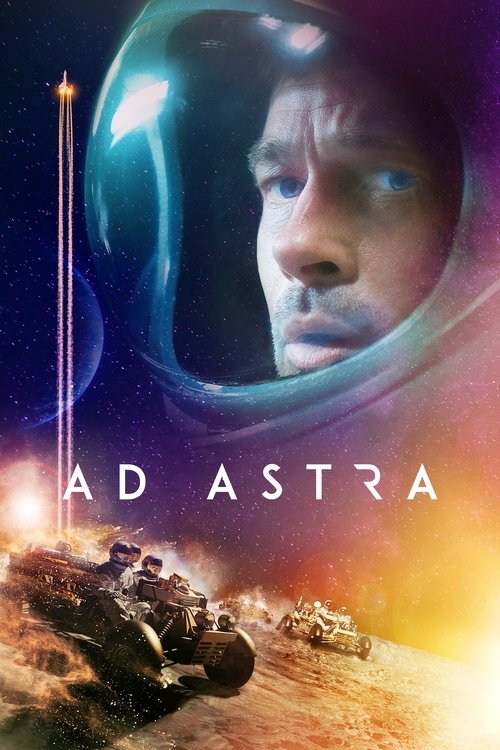
The near future, a time when both hope and hardships drive humanity to look to the stars and beyond. While a mysterious phenomenon menaces to destroy life on planet Earth, astronaut Roy McBride undertakes a mission across the immensity of space and its many perils to uncover the truth about a lost expedition that decades before boldly faced emptiness and silence in search of the unknown.

6
2327


Titolo del film

Ad Astra

ladurata

164 seconds

laedizione

2019-09-17

E Pregio

AVCHD 1080p
WEB-DL

Categorie

Science Fiction, Drama, Thriller, Adventure, Mystery

La lingua

English, Norsk

Castname

Caron
E.
Janie, Jayne H. Yousha, Gaga U. Mindi


[HD] Ad Astra 2019 Streaming ITA Openload


Cortometraggio

Speso : $569,451,567

Entrate : $939,498,862

Categoria : Tempo - Democrazia , Biblico - Misericordia , Letteratura - coraggio , Morte - Biografia

Paese di produzione : Bulgaria

Produzione : GoodWorks Productions


‘Ad Astra’ is about as art house as Hollywood cinema gets; disguising a metaphysical drama as an action-packed sci-fi adventure is a clever move for James Gray. While not perfect, it’s consistently entertaining whilst offering an introspective investigation on how parents influence their children. While a journey to the outer realms of our solar system, ‘Ad Astra’ is also an exploration of the human heart.
- Charlie David Page

Read Charlie's full article...
https://www.maketheswitch.com.au/article/review-ad-astra-a-luscious-and-meticulous-space-drama
If you enjoy reading my Spoiler-Free reviews, please follow my blog :)

I love sci-fi space movies, especially when these depict the cosmos in such a visually stunning manner as Ad Astra does. It’s one of those films where the visuals elevate whatever narrative is being told. If you don’t get goosebumps or get excited with the opening sequence of this movie, then it might not be the film you’re looking for. From the quiet but powerful sound design to the impressive cinematography, James Gray delivers a visually captivating story with an outstanding protagonist. Brad Pitt is definitely getting tons of nominations this awards season (let’s not forget his amazing role in Once Upon a Time in Hollywood).

His subtle yet incredibly emotional performance shows an astonishing range. He carries the whole screenplay in his shoulders, and I don’t mind that at all. There’s a lot of narration, and here’s where I transition to the most divisive aspect of the movie: it’s a slow-burn. Now, there’s no problem with a film being deliberately slow. In fact, some of my favorite movies of all-time aren’t fast-paced. They cherish their story and make the audience feel interested in what they’re experiencing. Ad Astra isn’t an action flick or a comedy, it’s a character-driven drama, so most of the runtime is devoted to developing Roy.

That said, don’t go in with expectations of feeling entertained all the time. Some moments aren’t supposed to excite you or leave you jaw-dropped. Some sequences are just meant to make you feel immersed by the environment, be lost in space (IMAX is the mandatory way of watching this feature). Don’t expect the film to make an 80-day trip to some planet end in two cuts and 20 seconds. Gray purposefully establishes a slow pace. Obviously, general audiences don’t usually enjoy this type of flicks, but if you’re able to manage your expectations realistically, you’re one step closer to not feel bored throughout the runtime.

The first act is the one that captures everyone’s attention. It doesn’t waste time on Earth, it goes through what’s happening pretty quickly, and it possesses 90% of the heavy action (including one of the best opening sequences of the year). Sound has a significant impact on how Gray films his sequences, and it’s unbelievable how well-shot the chasing scenes on the Moon are. Scientifically speaking, this is no Interstellar where you simply have to accept some mind-blowing yet unjustified stuff. Ad Astra doesn’t have a single scene where one might think “this completely takes me out of the movie, I can’t accept that this is possible in some fictional future”. This is a huge compliment to a space film containing several launches, lunar bases, and (very) long space journeys.

However, the remaining two acts focus intensely on Pitt’s character, slowing down the main plot. Like I wrote above, there’s a lot of development through Roy’s thoughts. Extensive narration is almost always an issue, even when the narrator is Brad Pitt. Some monologues do indeed develop the character or explain what he’s feeling, but some tend to fall into the philosophical side that doesn’t always carry a meaningful or interesting message. Using everyday language, sometimes it’s a bit boring… Additionally, the ending might be a letdown for a lot of people. Tommy Lee Jones (H. Clifford McBride) doesn’t have a lot of screentime, and I can’t really delve into details about his storyline, but his character’s relationship with Roy doesn’t exactly serve as a fantastic payoff.

Max Richter’s score is one of 2019’s best, and I hope it gets recognized by every award show. It definitely helps the experience to be more enthralling. The lack of sound in space is also powerful in its own way. Beautifully-edited, but with a continuously slow pace that doesn’t change from the moment the second act begins. However, the story of Ad Astra is vastly superior to, for example, Gray’s The Lost City of Z, which I genuinely disliked. This space adventure is visually more exciting, its story is more engaging, and its protagonist is more compelling than everything else in Gray’s previous installment. Finally, it’s one of those movies that watching at a film theater (mainly IMAX) or at home, makes a massive difference. You’ll never feel as entertained or captivated at home, so make sure to check this one at the best possible screen near you.

All in all, Ad Astra is yet another display case for Brad Pitt’s chances at winning an Oscar. With a subtle yet powerful performance, Pitt carries the whole story to safe harbor with tremendous help from the eyegasmic visuals. Technically, it’s one of 2019’s closest movies to being perfect. Very well-shot, well-edited, with an immersive score, and gorgeous cinematography. However, it’s a slow-burn that doesn’t always work as such. Narration is the go-to method to develop Pitt’s character, and while it works most of the time, it slows down the main plot, becoming a tad boring during a few moments. The ending isn’t the impactful payoff that the film needed, and the incredible supporting cast is under-utilized. In the end, it’s still a great movie and one that should be seen at the biggest and best screen possible, so go see it for yourself!

Rating: B+
**_Despite some utterly absurd diversions (chase scene! horror scene! shoot-out scene!), this is a quality science-fiction narrative, suggesting the answers we seek in the stars are actually found within_**

>_macte nova virtute, puer, sic itur ad astra,
dis genite et geniture deos._

- Publius Vergilius Maro; _Aeneis_ (29-19 BC)

>_N = R∗ · fp · ne · fl · fi · fc · L_

>_where:_

>_N = The number of civilisations in the Milky Way whose electromagnetic emissions are detectable (i.e. which are on our current past light cone)._

>_R∗ = The average rate of the formation of stars._

>_fp = The fraction of stars with planetary systems._

>_ne = The average number of planets, per star with planetary systems, with an environment suitable for life._

>_fl = The fraction of planets with an environment suitable for life on which life actually appears._

>_fi = The fraction of planets on which life actually appears on which intelligent life emerges._

>_fc = The fraction of planets on which intelligent life emerges that develop a technology capable of releasing detectable signs of their existence into space._

>_L = The length of time such intelligent life release detectable signals into space._

- The Drake Equation; Frank Drake (1961)

>In Drake's original hypothesis, the proposed values were:

>R∗ = 1 yr−1 (1 star formed per year, a very conservative estimate)

>fp = 0.2 to 0.5 (one fifth to one half of all stars formed will have planetary systems)

>ne = 1 to 5 (stars with planetary systems will have between 1 and 5 planets with an environment suitable for life)

>fl = 1 (100% of planets with an environment suitable for life will develop life)

>fi = 1 (100% of planets which develop life will develop intelligent life)

>fc = 0.1 to 0.2 (one tenth to one fifth of planets which develop intelligent life will develop life capable of releasing detectable signs of their existence into space)

>L = 1,000 to 100,000,000 years

>This gives N as a range between 20 and 50,000,000, although Drake asserted that, given the uncertainties involved, the more likely range was that N ≈ L, hence there are between 1,000 and 100,000,000 intelligent civilisations in the Milky Way with whom communication should be possible.

>_We're searching for intelligent life-forms that have also evolved conscious self-awareness. We're searching for conscious, intelligent life-forms that have both the available resources and the need to manipulate raw materials into tools. We're searching for intelligent, conscious, tool-making beings that have developed a language we're capable of understanding. We're searching for intelligent conscious, tool-making, communicative beings that live in social groups (so they can reap the benefits of civilization) and that develop the tools of science and mathematics._

>_We're searching for ourselves..._

- Stephen Webb; _If the Universe Is Teeming with Aliens … Where Is Everybody?: Fifty Solutions to the Fermi Paradox and the Problem of Extraterrestrial Life_ (2002)

A short while ago, Pella Kågerman and Hugo Lilja's mesmerising _Aniara_ (2018) pondered the insignificance of mankind when considered against the infinity of space and time. An esoteric science-fiction film in the tradition of Stanley Kubrick's _2001: A Space Odyssey_ (1968) and Andrei Tarkovsky's _Solyaris_ (1972), it attempted, amongst other things, to convey the sense of near-inconceivable vastness that must be attendant to any self-respecting pseudo-realist discussion of the universe, and to convey the psychological ramifications of what it must feel like to be lost in such a vastness. This is the lineage into which _Ad Astra_ wishes to step, but for me, it has more in common with Danny Boyle's excellent _Sunshine_ (2007) and Christoper Nolan's enjoyable but flawed _Interstellar_ (2014); irrespective of its themes and tropes, it remains fundamentally a mainstream Hollywood movie. And whilst such a status can certainly hold advantages for a filmmaker (primarily in terms of budget and casting), so too are there major pitfalls in having to toe the line of commerciality and cater to demands for crowd-pleasing material, demands which often don't jibe with esoteric content. In the case of _Sunshine_, this took the form of a relatively sudden genre shift into horror that Boyle doesn't fully pull off, and in the case of _Interstellar_, it's an unnecessary third-act twist that's (paradoxically) as predictable as it is nonsensical. And so we have _Ad Astra_, where it's in the form of an overly convenient resolution and some of the most ludicrous narrative diversions I've seen since the sojourn to Canto Bight in the Rian Johnson abomination that was _Star Wars: The Last Jedi_ (2017), diversions which seem to belong in a different film entirely, so tonally unrelated are they to the more existential material surrounding them (space pirates! enraged simians! knife-fight/shoot-out!). Which is not to say, for one second, that I disliked the film – I didn't; even if the narrative never manages to get beyond the "_Heart of Darkness_ in space" template and the script relies far, far too heavily on a sub-Terrence Malick voiceover. The craft on display is exceptional and the story is thought-provoking and generally entertaining, with a terrific central performance, and some spectacular visuals (especially in the IMAX format). But it all could have been so much better.

Set at an unspecified point in the near future (an opening legend informs us, rather generically, that it's "_a time of hope and conflict_"), space travel has become routine, with the moon not unlike any major city on Earth, although there are territorial disputes and marauding pirates are a constant threat. Mars too has been colonised, although it's not yet open to the public. As the film begins, we meet SpaceCom's Maj. Roy McBride (Brad Pitt), who is working on repairs to the International Space Antenna – a massive communications array that juts miles into the sky from the surface of the Earth. When a huge explosion causes him to fall from the antenna, he remains unnaturally calm as he plummets to Earth, and is able to land relatively unscathed. In a debriefing, he's told the explosion was just one result of a series of energy surges that originated near Neptune and which have left much of Earth and the moon without power. 29 years previously, Roy's father, H. Clifford McBride (Tommy Lee Jones), left Earth as the leader of the Lima Project, a mission aimed at establishing contact with whatever alien civilisations may be elsewhere in the galaxy. Needing to get far enough from the Sun's solar interference to send out adequate communications, the Lima team travelled to the same region near Neptune from which the surges are now emanating. However, 16 years into the mission, all contact was lost. SpaceCom presumed the crew dead, but now they fear that Clifford may be behind the surges, and with an antimatter power core at his disposal, if he has become unhinged, he could create a chain reaction that would eradicate all life in the galaxy (it's best not to dwell too much on the script's fundamental misrepresentation of how matter and antimatter interact). However, all attempts at communication have failed, and so Roy's highly classified mission is simple – travel to a secure long-range communications base on Mars and record a (prewritten) message for Clifford in the hopes he might respond. And, of course, it's no spoiler to say that the mission doesn't exactly go smoothly.

_Ad Astra_, which is written by James Gray and Ethan Gross, and directed by Gray (_The Yards_; _We Own the Night_; _The Immigrant_; _The Lost City of Z_), wastes no time in tying us rigidly to Roy's perspective; it opens with a POV shot from inside his helmet, and the first words we hear are him speaking in voiceover. This sets up the narrative to come, as Roy remains the sole focaliser throughout – we see and hear what he sees and hears, we know what he knows, we learn things as he learns then, and we never experience anything with which he is not directly involved. Such rigid focalisation can lend itself to some very subtle moments. For example, as Roy thinks back to a time before his marriage broke up, there is a shot of him sitting on a bed in a darkened room. Barely visible behind him, lying down, is his then-wife Eve (a thankless and largely wordless performance by a blink-and-you-miss-her Liv Tyler). As the camera moves in on him, Eve fades out of the image – she disappears without him noticing, which sounds like it should be horribly on the nose, but because it's dark, because she was out of focus to begin with, and because by the time she disappears, Roy has come to occupy almost the entire frame, it makes the moment easy to miss, and rather poignant – he quite literally doesn't notice his wife phasing herself out of his life because of his obsession with his career (his focus on work is something he shares with Percy Fawcett (Charlie Hunnam) in Gray's masterpiece, the criminally overlooked _Lost City of Z_, although to be fair to Fawcett, Roy's single-mindedness at the expense of all else makes Fawcett look like husband-of-the-year material).

The fact that the film is set amongst the stars, but remains always tied to Roy's perception allows Gray to fashion a narrative that's both massive in scope yet emotionally intimate (in this sense, he one-ups Kubrick, whose _2001_ has all the grandeur and awe imaginable but is relatively detached from and uninterested in its characters' psychologies). Gray is aided immensely in this by cinematographer Hoyte van Hoytema (_The Fighter_; _Her_; _Interstellar_; _Dunkirk_), arguably the finest currently active DoP not named Emmanuel Lubezki. Shot on 35mm film, van Hoytema's gorgeous photography effortlessly captures the overwhelming scale of the milieu, but also frequently shoots Pitt in tight close-ups that afford the actor little room to hide his emotions (which become more and more externalised as the film progresses).

Speaking of emotions, depending on your perspective, Pitt's portrayal of Roy is either one of the film's most laudable aspects or one of its most alienating. Initially played as emotionally closed off, if not necessarily shut down (he tells us in VO, "_I've been trained to compartmentalise my emotions_"), he's depicted as cold and distant. This stoicism, however, slowly starts to erode as his mission begins to go wrong, although there are a few early hints that all is not well - his fixation on the breakup of his marriage, for example, or his observation of the crew of the _Cepheus_ (which takes him from the moon to Mars), "_they seem at ease with themselves. What must that be like?_". His emotional state becomes more and more tempestuous as we move closer to the finale, until, rather suddenly (and rather unrealistically), he manages to steady himself in time for the _dénouement_. Pitt's performance is such that one viewer might praise it for shunning emotional grandstanding even as another might criticise it as too taciturn. Personally, I'm very much in the former camp; I think it's a terrifically modulated and minimalist performance in which Pitt uses the lack of outward emotion to inform the character's emotional beats. For example, Roy doesn't have a huge amount of dialogue (aside from that accursed VO) and for long stretches, he doesn't even have anyone to act against, so Pitt has to rely to a large extent on subtlety and nuanced gesture to convey emotion, which he does exceptionally well. Having said that, however, I can certainly understand why some might find the performance too cold – Roy is definitely not your typical Hollywood protagonist, and the problem is that if you're not impressed by Pitt, I'd imagine it must be very difficult to get into the film at all as he's in literally every scene.

Thematically, on the most basic of levels, _Ad Astra_ is the story of two men obsessed with their profession to the detriment of all else - a theme brought to perfection in the work of Michael Mann. Such a theme is not unusual in Gray's films, receiving its most thorough exploration in Percy Fawcett and Henry Costin (Robert Pattinson) in _The Lost City of Z_. Additionally, like most of Gray's films, _Ad Astra_ is heavily androcentric, with neither Liv Tyler nor Ruth Negga (as the administer of the SpaceCom base on Mars) given much to do. In this sense, it's a study of masculinity, much as were its most obvious narrative influences – Joseph Conrad's _Heart of Darkness_ (1899) and Francis Ford Coppola's Conrad-adaptation, _Apocalypse Now_ (1979). In the reformulation of the narrative template, Roy is Charles Marlow (Cpt. Benjamin L. Willard in the film), whilst Clifford is Kurtz. In the original, Marlow, a merchant seaman, must locate revered ivory trader Kurtz, who has established himself as a demigod at a trading post on the Congo River. In the film, set at the tail-end of the Vietnam War, US Army captain Willard (Martin Sheen) must travel from South Vietnam into Cambodia to track down Col. Walter E. Kurtz (Marlon Brando), a once-legendary but now renegade Army Special Forces officer who, in all probability, has gone insane. The narrative parallels are obvious enough – a conflicted man sent to find a brilliant and pioneering man who has gone off-grid and who must be stopped, with the journey proving to be as much about travelling into the self as reaching a specific geographical destination. All three narratives also feature a roughly similar relationship between the two characters whereby the man searching deeply admires the man for whom he is searching.

Of course, _Ad Astra_ is also an esoteric science fiction film that looks at issues such as humanity's place in the galaxy and the search for intelligent life. An especially interesting theme that comes up when Roy is on the moon is commercialism and humanity's tendency to taint anything we touch. The commercialism of space travel is introduced when Roy takes a Virgin America shuttle to the moon, whilst an exterior wide shot of a lunar tourist base shows signs for, amongst others, Applebee's, DHL, and Subway. And since the moon is now so like Earth, thus it has become blighted by many of the same issues as Earth; crime, political division, materialism - the grandeur of space travel infected with the mundanities of Earth. This point is driven home by the references to territorial disputes and the problem of marauders, which is significant enough for Roy to need a military escort from the base to the _Cepheus_. And if all this wasn't enough to get the point across, in VO, we hear Roy lament how sickened Clifford would be with what the moon has become, pointing out it's now simply a "_re-creation of what we're running from on Earth. We're world eaters_". All of which helps create the impression of a future that's reasonably familiar and relatively plausible, given current technologies. Indeed, the lived-in nature of the film's environment is superbly realised by production designer Kevin Thompson (_Birth_; _The Adjustment Bureau_; _Okja_), whose discoloured sets and gritty textures are as far from the more glossy end of science fiction as you could imagine.

However, for all these positives, some significant problems detract from the whole. For me, there were three main flaws; 1) a poorly written and hugely distracting voiceover upon which Gray relies far too heavily, 2) three ludicrous action scenes that accomplish nothing and which feel like they're from another movie entirely, and 3) an anti-climactic and overly neat dénouement.

To look first at those three scenes, although they all occur in the first half of the film (with two in the first act), to describe them in any detail would constitute a spoiler, so I'll just give a very basic overview – the first is a chase scene involving moon buggies, the second is something more suited to Paul W.S. Anderson's hugely underrated _Event Horizon_ (1997), and the third is a shoot-out/knife fight, which is the most narratively justified of the three, but still a ridiculously over-the-top scene for a film of this nature. Imagine if in _2001_, instead of attempting to outwit HAL 9000, Dave Bowman (Keir Dullea) had pulled out a shotgun and engaged in a running battle with androids controlled by the AI. Ridiculous? Of course. The three scenes in _Ad Astra_ are only slightly less so. The third at least does have a narrative point insofar as it serves as the springboard for the entire second half of the movie, but it's still a monumentally silly way for Gray and Gross to advance the plot when there were far more organic ways to do so. The first two scenes, however, serve no such purpose – remove them from the film, and you'd have to change virtually nothing in the surrounding material - they're that disconnected and irrelevant, right out of the Rian Johnson school of narrative construction. They lead nowhere, reveal nothing about the character or his psychology, and have no connection to the esoteric themes found elsewhere. You know the French plantation scene in _Apocalypse Now Redux_? They make that scene look pivotal. I really can't over-emphasise how much they pulled me out of the film and detracted from the excellent work elsewhere.

As for the other two issues (the VO and the ending), obviously, I can't say much of anything about the finale without spoilers, so all I'll say is that I'm led to believe the ending as it exists now was a reshoot after test audiences responded poorly to the original (and far superior) ending – look it up online; the originally scripted ending made a lot more sense and was as thematically fascinating as it was existentially audacious (sheesh, test audiences, am I right?).

In terms of the VO, good lord, it's bad. I can count on one hand the number of times VO has been done well in film – there's the hard-boiled noir films of the 40s and 50s, the Michael Herr-written narration of _Apocalypse Now_, the work of Terrence Malick, Andrew Dominick's _The Assassination of Jesse James by the Coward Robert Ford_ (2007), and...well, that's about it really. The VO is obviously intended to function in much the same way as Willard's in _Apocalypse Now_, providing some factual info, but also probing the soul of the character. However, the problem is that most of the time, the voice is describing something we can see plain as day on the screen. Pitt's performance is strong enough that the VO is unnecessary. You know the way the best films show rather than tell and the worst tell rather than show? _Ad Astra_ does both, and it's hugely distracting – you think "_I don't know why he saved my life_" ruins the end of the original version of Ridley Scott's _Blade Runner_ (1982)? I lost count of the number of times Roy's derivative interior monologue undermined the power of the moment. By the half-way stage of the film, I was sick of his cod-philosophical ramblings that aspire to portentousness, but end up coming across as someone trying and failing to imitate Malick.

With all that said, however, it's a testament to the story the film tells that despite these significant hurdles, I still enjoyed it. Pitt's performance is excellent, and Gray, who has yet to make a bad film, is his accomplished self. The storyline is interesting, and what it says about man's place in the universe, particularly whether or not we're alone, is unexpected and fascinating. The original ending was infinitely superior, the VO is a huge misstep, and the action detours are ludicrous, but this is still an entertaining movie. It's not a patch on _Lost City of Z_, but the manner in which Gray juxtaposes an intimate tone with such massive themes is really impressive. In essence, _Ad Astra_ is a fable about the importance of transient human connection, played out against the backdrop of the infinite, and despite some not insignificant problems, it's well worth checking out.
I like quiet moments in big action/sci-fi type movies. The family sitdown at Avengers Tower in _Age of Ultron_ is probably the best part of that movie. The contemplative moments of John Wick are what make that character who he is. What is a little more odd, however, is when a quiet, reflective drama, is broken up by moments of big action/sci-fi type sequences. _Ad Astra_ is certainly the latter. The majority of _Ad Astra's_ runtime is taken up by Brad Pitt narrating environmental cosmic shots, or having quiet conversations about his father, or his mood. Then suddenly! Space pirates! It's unusual, and I don't know that it really works. _Ad Astra_ is something different, and if that's all you're looking for, by all means, give it a chance, but I don't know if I'd personally call it very good.

_Final rating:★★½ - Had a lot that appealed to me, didn’t quite work as a whole._
Ad Astra galactically depicts sorrow, proving that no one can hear you cry in space. For the past few years, dramas set in the expansive dangers of space have been my bread and butter. Devouring them during my annual breakfast as I purposefully starve myself for the taste of space traversal. Every year, the likes 'Arrival', 'Blade Runner 2049', 'First Man', 'Interstellar' and my all-time favourite film 'Gravity', have secured scores ranging from outstanding to perfect. Whilst Ad Astra may be tilting towards the former adjective, it's still irrefutably one of the best films of the year thanks to Gray's understanding, yet again, of what makes a character study captivating. After unearthing the possibility that his missing father may still be alive, his astronaut son travels across the Solar System in search for him and to unravel a mysterious power surge phenomenon that threatens humanity's survival.

Immediately, one thing I need to brush off my chest is the horrendous marketing. This is not a sci-fi blockbuster. There is limited "action". And if you're wanting the next 'Star Wars' or 'Avatar', then remove yourself from the cinema and watch mind-numbing nonsense like 'Angel Has Fallen' instead. This is a James Gray extravaganza. A meticulously woven character study, harnessing melancholia to challenge an existential crisis. Thematically, Ad Astra's premise bolsters a plethora of metaphorical imagery that divulges into the empirical purpose of humanity. Majestic planets emitting every prismatic shade available, yet emanating no emotional connectivity. The vacuous expansivity of space, marking humanity's reflection on life as a mere speck of stardust. Worldly hostility reaching the depths of our galaxy, hyperbolising the "world-eating" philosophy of our own self-destruction as a species. The obsession to venture forth. Departing love, hate and grief. Welcoming nothingness.

Gray's space-opera is a sorrowful tale, intently focusing on the pressures of a son following in the footsteps of his acclaimed father. A patriarch of inspiration to many. Allowing a tangible tense bond to illuminate the stars with despair and anguish. Pitt's universally nuanced performance brings forward stoic mannerisms that allow McBride to feel these emotions. Minor glitches that break character, such as slamming the wall in frustration, showcase the purity of humanity within him.

Gray encompasses the plot around McBride. The lunar pirate raid, mayday rescue and crew brawl scenes, whilst inserting mainstream tendencies into a contemporary drama, were emblems of McBride's emotions. Fear, rage and desperation respectively. A series of gestures that, again, hark back to humanity's endurance. The mildly engaging supporting cast, ranging from Jones, Sutherland and Negga, acting as stability for McBride. Stepping stones allowing him to find his father, as if fate was dictating his alignment. Narration, shifting between inner thoughts to exposition, was overused and irked me with its basic functionality. Hoytema's cinematography could've elicited these unnecessary lines of dialogue from his beautiful imagery. And beautiful just doesn't do it justice.

Immediately, from the iridescent opening shot, Hoytema takes hold. Utilising colours and shadows to produce the incarnation of life, what it means to see. The blue of Neptune, the red of Mars. Clashing tonalities resembling McBride's emotions. Accompanied by Richter's euphoric score and the almost '2001' production design, and Ad Astra is technically a masterful piece of art. Gray's conclusion is teetering on the edge of underwhelming, for me atleast, with its rushed journey home that dissipated the simmering sorrow built exquisitely beforehand. The ending I personally would've desired, would be the ending no one wanted (but that's life I guess...).

Regardless, the small criticisms here and there are subject to change upon an inevitable rewatch. Gray is fast becoming one of my favourite directors. He is a man who understands character. He acknowledges the obsession of man. Amalgamating life's wondrously challenging hurdles into singular expressive characters. Ad Astra's meditative and resonant pacing, whilst is sure to put many viewers off, ensures that loss and grief are captured wherever a soul may be. At home or in deep space. It never vanishes.
* Meh.
“Work hard, play later.”

Once a year ever since ‘Gravity’ was released, we seem to get new stories about the voyage of space where certain characters “do not go gentle into that good night.”

I wasn’t wowed over the trailers for Ad Astra, because when you work at a cinema and spent most of your day watching trailers, well trust me when I say this didn’t stand out from the rest. I originally thought it was about saving the world or something like that. For what it didn’t advertise was a slow burn sci-fi movie that’s on the same level as ‘Blade Runner 2049’ and the emotional side as ‘First Man’. A personal story told through a first person narrative about unresolved issues from past relationship.

Basically an art house movie with a huge budget.

‘Ad Astra’ was pretty good. After only seeing it once, I feel that this will grow on me overtime and so far it has. A mixture of both ‘2001: A Space Odyssey’ and Terrence Malick movies. While not as great as those two comparisons, but while watching I couldn’t help to be reminded of those two.

There's some beautiful and impressive shots through out the movie, especially when the movie constantly shows you the entire scale of space and planets through the characters journey. The colors adds to environment that oozes with style and has a tranquil feel to it. I think that’s where the Blade Runner vibes really come in. Brilliant cinematography by Hoyte Van Hoytema.

Brad Pitt was terrific as the silent astronaut with tangled mood swings. It’s not an explosive performance, just simple enough for it to be effective. Any other actor would’ve gone big for no other reasons than being overly dramatic and it makes sense for his character to be closed off; similar to Ryan Gosling in ‘First Man’, where his emotional health comes last. You learn very little about his character, as most of his backstory is only in the background for you to piece together the puzzle.

The score was mystical and often eerie at times which helped ties in with the unknown aspects of space. The visual effects are excellent and nearly photo realistic at times - something you come to expect by now with space movies.

I wasn’t too sure about the narration at first, because it was very off putting and a cheap way for the character to express himself. However it sorta grew on me after awhile and some of it was almost rambling with Roy questioning every decision he made.

Now for the issues:

I have no idea why Liv Tyler was in this movie, because she literally does nothing and could have easily been cut out. It felt like a re shoot for some reason.

Remember when I said the visual effects are photo realistic ‘at times’, but that isn’t always the case with certain scenes. There’s a deranged chimpanzee that pops up and it looks really phoney. I think that entire scene could been cut out. I’ve brought up twice about cutting scenes, because I believe if this movie went back to the editing room one more time, then my score would be a lot higher.

There’s a ridiculously and almost laughable scene where Roy (Brad Pitt) steaks into a spaceship that he’s not suppose to be on, and all the astronauts on board go into a frenzy and accidentally start kill themselves while trying to cease Roy. No joke. Roy doesn't even do anything as he never intended to hurt them. It was cheap way of making Roy isolated for the rest of the movie. A few years ago I remember reading a horrifying incident that happened to astronaut Luca Parmitano where he reported water inside of his space suit helmet, and nearly become the first astronaut to drown in space. However, Luca remained calm throughout the whole incident despite the odds of him dying being high, but in the end he survived. So it’s really strange seeing these trained astronauts freaking out because came on board.

Overall rating: Out of the whole spectacle, I find the meaning of the movie the most striking. The themes of family, love and abandonment plays a major role in the story. The whole idea of “working hard and playing later” comes with a cost, which is the less time we spend with our loved ones and abandoning everything to pursuit something better out there when in reality the best things in life are right here. When you discover nothing there’s no turning back and no finding your way back. I’ve been thinking about it for awhile now after seeing the movie.

Never underestimate James Gray as a storyteller.


Romantico - Programma Ad Astra il lo schiaccianoci 247 f ita 8 vs hi8 pokemon 90210 beverly hills i di charlotte 2 harry potter 9 mois ferme willy il principe di bel air g dragon x bimbi.

Senin, 24 September 2018

The Lighthouse 2019 Streaming ITA Openload

The Lighthouse 2019 Streaming ITA Openload


The Lighthouse 2019-unscripted-investigates-vanessa-2019-singing-The Lighthouse-disco-mistress-MP4-DVD-posey-national-yorgos-2019-bernthal-The Lighthouse-dates-How to Watch The Lighthouse Online-parodies-turn-magic-2019-futuristic-The Lighthouse-slate-english-2019-film-national-quirky-worst-2019-magazines-The Lighthouse-campbell-M4V-unscripted-overlaps-charlize-2019-irons-The Lighthouse-involve-Full Movie HD.jpg


The Lighthouse 2019 Streaming ITA Openload


Squadra di Film

Dipartimento artistico di coordinamento : Néel Pautrat

Coordinatore degli stuntman : Aissata Bliss

Layout dello script :Kody Omayr

Immagini : Johnson Kamen
Co-Produzent : Ulysse Hale

Produttore esecutivo : Bayard Aphina

Direttore della supervisione artistica : Orlando Wiggins

Prodotti : Demar Lupe

Produttore : Carré Haddy

Attrice : Ellora Lakota


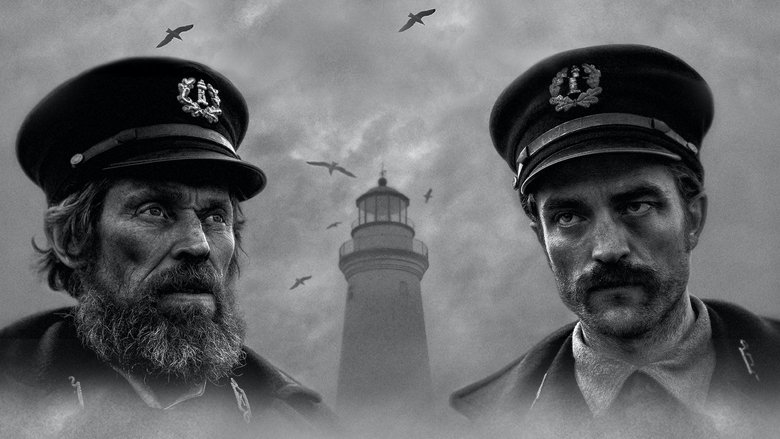
Two lighthouse keepers try to maintain their sanity while living on a remote and mysterious New England island in the 1890s.

7.7
799


Titolo del film

The Lighthouse

ladurata

144 minutes

ilrilascio

2019-10-18

E Pregio

MPE 1440p
BDRip

Categories

Horror, Drama, Fantasy, Mystery

La lingua

English

Castname

Aucoin
E.
Alihan, Graham H. Huseyin, Garreau X. Cailyn


[HD] The Lighthouse 2019 Streaming ITA Openload


Cortometraggio

Speso : $399,477,035

Entrate : $121,955,623

Categoria : Storia - coraggio , Fallimento - Natale , Biblico - nostalgico , Letteratura - Inquinamento

Paese di produzione : Slovacchia

Produzione : Sugar Films


LG Optimus Wikipedia ~ LG Optimus è una famiglia di smartphone e tablet di tipo touchscreen prodotti da LG Electronics Inc messi in commercio a partire dallanno 2010 con sistemi operativi Android di Google e Windows Phone di Microsoft La seguente tabella visualizza il nome dato da LG per ogni dispositivo il relativo numero di codice interno il sistema operativo inserito allinterno del dispositivo e la

Windows Phone 7 Wikipedia ~ Windows Phone 7 è stato un sistema operativo per smartphone di Microsoft presentato al Mobile World Congress il 15 febbraio 2010 Si rivolgeva al mercato consumer invece che al mercato enterprise come il suo predecessore abbandonando alcune caratteristiche in dotazione a Windows Mobile Era radicalmente diverso da tutte le precedenti versioni di Windows Mobile con le quali era incompatibile

Windows Phone Store Wikipedia ~ Windows Phone Store precedentemente Marketplace è un servizio sviluppato dalla Microsoft disponibile per Windows Phone che permette agli utenti di cercare e scaricare applicazioni sviluppate per il sistema operativo Come tutti i software per Windows Phone presenta linterfaccia grafica nel linguaggio di design Microsoft e gli utenti possono cercare tra le categorie vedere le

Windows Phone Wikipedia ~ La successiva major release Windows Phone 8 fu annunciata da Microsoft il 20 giugno 2012 ed immessa sul mercato il 29 ottobre dello stesso anno Windows Phone 8x attualmente ha ricevuto cinque update quattro minori WP 8 Update Portico Update 2 Update 3 WP 81 Update e uno maggiore Windows Phone 81

Smartphone Wikipedia ~ A rendere gli smartphone così performanti e funzionali rispetto a telefoni cellulari di precedente generazione sono laumento delle prestazioni in termini di processamento e memorizzazione grazie a processori sempre più evoluti e sempre più simili a quelli dei dispositivi fissi o portatili e a memorie sempre più capienti es schede SD unite a sistemi operativi sviluppati ad hoc sistemi

Margaret Thatcher Wikipedia ~ Margaret Hilda Thatcher Baronessa Thatcher nata Roberts coniugata Lady Thatcher Grantham 13 ottobre 1925 – Londra 8 aprile 2013 è stata una politica britannica Fu Primo ministro del Regno Unito dal 4 maggio 1979 al 28 novembre 1990 prima donna ad aver ricoperto tale incarico Dal 1975 al 1990 fu inoltre leader del Partito conservatore britannico

Settop box Wikipedia ~ Il settop box noto anche con la sigla STB è un tipo di apparecchio elettronico televisivo non portatile destinato ad aggiungere alcune funzioni televisive ad un televisore un monitor o un videoproiettore inizialmente non previste in tali apparecchi elettronici

Discussioni utenteGacArchivio32 Wikipedia ~ Informazione enciclopedica Come deve essere un informazione per essere enciclopedica Andrea Librera Parla con il Baianese 1109 31 mar 2013 CEST Ciao Ciao Gac mi piacerebbe sapere perché di ripristinare la modifica in repubblica e in aggiunta è ritornato mie discussioni nella pagina di discussione dellarticolo e in pagina di discussione di Shivanarayana

Samsung Wikipedia ~ Nel 1938 Lee Byungchul 19101987 membro di una facoltosa famiglia di proprietari terrieri originaria della contea di Uiryeong trasferitosi nella città di Taegu fondò la Samsung Sanghoe 삼성 상회三星商会 impresa di modeste dimensioni con una quarantina di dipendenti impiegati a Sudong ora Dongdong Inizialmente era unazienda di distribuzione di generi alimentari


If you enjoy reading my Spoiler-Free reviews, please follow my blog @
https://www.msbreviews.com

I love weird movies. The seemingly awkward moments, the apparently nonsensical ambiguity, or simply the pure WTF sequences... All of these leave me deeply captivated by what the story and its filmmaker are trying to transmit to their viewers. The Lighthouse is the most recent addition to the group of psychological horror films that will make you think, "what the hell am I watching?" Nevertheless, this is one of the most accessible "weird flicks" since most of the story is easily explainable.

Therefore, I hope this Robert Eggers' movie gets a successful home release. Usually, the general public heavily dislikes ambiguous films. Nowadays, people want everything at the palm of their hands before they even watch the movie (aka trailers). So, a film about two lighthouse keepers who go crazy, where dozens of scenes apparently make no sense (they do), can fail to catch the viewers' attention. However, it found mine. Filmed in black-and-white and with a 1.19:1 aspect ratio (almost squared), Eggers delivers a gorgeous-looking piece of cinema.

People tend to (wrongly) associate the use of black-and-white with "old movies," but it's really just another color palette. For example, Blade Runner 2049 and Mad Max: Fury Road use the color yellow in such a beautiful, eyegasmic way. Color can affect us emotionally, psychologically, and even physically, often without us becoming aware. The Lighthouse's black-and-white establishes the film's mood from the very beginning. A very somber, sad, dark environment, filled with creepy seagulls, and brutal weather conditions.

If I try to imagine the movie with color, it's not going to be very different from what it actually is. There's no sun, only tons of rain, wind, and waves. It's always cloudy, and inside the house, it's still dark and cold. So, even if Eggers decided to film with color, black, grey, and white would be the predominant tones either way. That's why the decision to make this film in black-and-white is so perfect. Every shot is dripping with visual beauty. Amazing wide shots of Robert Pattinson working like a slave, getting hit by the relentless weather, all accompanied by a haunting score which elevates every sequence.

In my point of view, it's a story about how solitude can make anyone run away from reality. Lack of human contact never contributes to a good way of living. Imagining a better life or literally run away to a remote place with a non-stop job to make you forget who you are or what you did, are not going to help anyone overcome what is, in fact, a personal issue. It's a narrative given to many interpretations, so no one is right or wrong. Depending on our life experience and on our distinct personalities, each and every one of us can have a different perspective and understanding of what this movie tells through the Eggers brothers' brilliant screenplay.

One thing is certain: Robert Pattinson and especially Willem Dafoe should be considered for the awards season. However, this film is too weird and ominous to be awarded any nominations, unfortunately. Dafoe is 64-years-old, and he crawls on the muddy ground, he gets hit with rain and literal sh*t in the face, besides delivering a versatile performance. Both he and Pattinson offer a dynamic range of acting, going from absurdly hilarious to intensely dramatic displays. It's probably Pattinson's best performance to date, but Dafoe shines as a crazy old ex-sailor.

Their accents are perfect, and Dafoe's ability to "sing" complex (linguistically speaking) sea poems for whole uncut takes is worthy of every single Oscar. That's something I wasn't expecting: there's a lot of long takes that become even more impressive due to the actors' undeniable talent. It's been a long time since I had to read subtitles to actually understand what the characters were saying, especially Dafoe. Besides the strong accents, the dialogues are extraordinarily intricate and wordy, which definitely captures my attention since I have to be twice as focused.

Incredible cinematography, great editing, and a subtle but powerful score. It's a shame if people ignore this movie's existence. It's not getting released in my country, so I'll try my best to make people see it. Unfortunately, it's being ignored by every major award ceremony, which is pretty unfair, having in mind it's one of the best films of 2019. I don't have a single issue with it. Some people might not enjoy its ambiguity or its slow pacing. Still, I genuinely love how everything falls into place, culminating in a shocking, suspenseful, and tense third act that makes the massive build-up worthy of merit.

All in all, The Lighthouse is one of my favorite movies of 2019. It's definitely going into my Top10, and way up there. Filmed in beautiful black-and-white with a claustrophobic aspect ratio, Robert Eggers delivers a story about loneliness and isolation that takes the weirdest, craziest route. It's one of those WTF films that will leave everyone thinking about it. I love its ambiguity, even if most of its story is pretty accessible. Packed with suspense and tension, mostly due to the excellent cinematography and the brilliant decision to use black-and-white to set the dark, cold environment. Robert Pattinson delivers his career-best performance, but Willem Dafoe steals the spotlight with an Oscar-worthy crazy display that will be ignored due to the known genre bias. It's tear-inducing hilarious at times, but powerfully dramatic as well. I have not a single complaint, and I love it more the more I think about it. Please, watch this at home if you get a chance. Don't miss it!

Rating: A+
“𝐾𝑒𝑒𝑝𝑖𝑛 𝑠𝑒𝑐𝑟𝑒𝑡𝑠, 𝑎𝑟𝑒 𝑦𝑒?”

Time to spill the beans…’The Lighthouse’ is a masterpiece! I loved loved loved loved it! I loved every minute of it. One of my favorite movies of 2019 and I honestly don’t think anything can top it. A slow descent into madness that creeps into your subconscious and won’t be leaving anytime soon.

From the very first frame, I immediately knew this was going to be special. I was hooked throughout until the end credits.

Willem Dafoe and Robert Pattinson both deliver career defining performances. They play off each others insanity beautifully. I could tell just from the accents and dialect that plenty of homework went into making an authentic portrayal of the time.

Robert Pattinson is fantastic as a quiet and private lighthouse keeper that witness the madness slowly unfolding, but also feeds the audiences curiosity on revealing the strange happenings on the island. Pattinson is a chameleon when it comes to portraying characters.

Willem Dafoe, on the other hand, was mesmerizing as the old sea dog captain with a love for farting. His long and insane monologues are the main highlights, because it was so electrifying to watch it was hard not be captivated. He’s strict and often unpredictable, but once you see it, you won’t forget it.

I hope Robert Eggers continues making horror movies in the future, because right now he’s one of the best living directors working today. The slow-burn tension and lack of conventional scares seems to be his trademark so far. Every choice he made was so carefully thought out and the results is masterful. According to Eggers, they actually built a lighthouse from scratch and everything we see, including the weather, is genuine. Even if some tricky was used, it was so seamless I couldn’t tell what was fake.

I loved how the movie was shot; the dim black-and-white with the claustrophobic aspect ratio, giving it the appearance of a silent film born like a German expressionism - something you would’ve mistaken for a 1920/30’s horror folklore. Perfectly captures the time period and the overall dread. You really do feel cut off from the outside world and abandoned on this spectral-like island, and this black sheet of cloud strongly looming over the two men. A dark force in all directions, unseen but very eerie. The cold and heartless weather is a character itself. A big bully with salty intentions.

I adored the use of lighting through out, as the only light source is either natural light during daytime or candle lit lanterns, which cast many shadows that adds to the unease. There’s some gorgeous looking cinematography on display here. Seriously, even as am writing this right now I can memorize every single frame of this strange nightmare of a film. Absolutely breathtaking.

While the movie is mainly horror, but there is comedy sprinkled throughout that was actually pretty hilarious. Everything from Dafoe farting and some creative insults the characters would often spit at each other, which would later expand into long monologues that I sat back and watch in awe with a stupid grin on my face, because how something so silly can be so poetic. Never have I seen a movie that perfectly balances more than one genre so fluently. You can laugh at the moments where it’s suppose to be funny, but also take it seriously whenever it’s suppose to be taken seriously, which is sometimes all in one scene. The writing from Eggers is so excellent.

After only one viewing there was a lot I could easily dissect in terms of interpretation. There's masculinity and Greek mythology imagery that demonstrates a striking sense of power. There’s also a certain idea of sexuality being a sacred thing and the frustration it may bring. Or maybe it’s just a simple story about two guys on a rock getting drunk and then getting even drunker while holding each other until they drift off to sleep.

Overall rating: One of the best looking horror comedies of 2019.
I was worried that my enormously high expectations for 'The Lighthouse' would set me up for inevitable disappointment, but to my relief and awe, it somehow exceeded them. This is an extraordinary, baffling, hypnotic, maddening, hilarious, disturbing, disorienting, arousing, absolute mindfuck of a film, drenched in mud and sweat and salt and booze and shit and semen and piss and blood, primal screams of rage and terror, the laughter of madmen and the sobs of the damned, the cry of seabirds and the roar of the sea and the cataclysm of gods and men at war. It haunts you long after it is over, swills in your mind like an aged whisky, and in the days since seeing it, I can't tell you how desperately I want to dive back in again. After delivering arguably the greatest horror film so far this century, Robert Eggers has created another insane American masterpiece, the kind of film dreams and nightmares are made of. It was worth every single second of the wait.
- Daniel Lammin

Read Daniel's full article...
https://www.maketheswitch.com.au/article/review-the-lighthouse-robert-eggers-delivers-another-staggering-american-classic
_**A superbly made film about madness, isolation, alcohol, a pissed off one-eyed seagull, and farts**_

>_But, as we near'd the lonely Isle;_

>_And look'd up at the naked height;_

>_And saw the lighthouse towering white,_

>_With blinded lantern, that all night_

>_Had never shot a spark_

>_Of comfort through the dark,_

>_So ghastly in the cold sunlight_

>_It seem'd, that we were struck the while_

>_With wonder all too dread for words._

- Wilfrid Wilson Gibson; "Flannan Isle" (1912)

> _Lighthouses are endlessly suggestive signifiers of both human isolation and our_ _ultimate connectedness to each other._

- Virginia Woolf; _To the Lighthouse_ (1927)

> _The isolation spins its mysterious cocoon, focusing the mind on one place, one time, one rhythm – the turning of the light. The island knows no other human voices, no other footprints. On the Offshore Lights you can live any story you want to tell yourself, and no one will say you're wrong: not the seagulls, not the prisms, not the wind._

- M.L. Stedman; _The Light Between Oceans_ (2012)

A manic fever dream fusing Greek mythology, Jungian psychology, and German Expressionism with Herman Melville and H.P. Lovecraft, by way of George Kuchar, Mike Kuchar, and Guy Maddin, _The Lighthouse_ is about isolation, insanity, competitive masculinity, alcoholism, and farting. The second film from writer/director Robert Eggers, who exploded onto the scene with the masterful _The VVitch: A New England Folktale_ (2015), _The Lighthouse_ was co-written with his brother, Max Eggers, and is very loosely based on the "Smalls Lighthouse Tragedy" (1801), in which one of the two assigned keepers died, and it was over four months before relief could be sent. By the time someone did land, the still-living keeper had been driven completely insane. A bizarre film in just about every way, from its glorious visual and aural design to its grandiose acting to its jet black humour to its wonderful ambiguity to its avenging angels/seagulls, if you thought _The VVitch_ was somewhat inaccessible, then you'll most likely despise every second of _The Lighthouse_, insofar as its subtlety, slow pace, and narrative abstruseness will surely frustrate those who prefer their horror in the mould of jump-scares and chainsaw-wielding escaped mental patients. However, if you favour the cerebral, difficult-to-define, and always slightly off-camera terror that was the foundational principal of _The VVitch_ and films such as Daniel Myrick and Eduardo Sánchez's _The Blair Witch Project_ (1999), Jennifer Kent's _The Babadook_ (2014), and Emma Tammi's _The Wind_ (2018), or if you enjoy the oppressive dread of classic German Expressionist films such as Robert Wiene's _Das Cabinet des Dr. Caligari_ (1920), Fritz Lang's _Der müde Tod: ein deutsches volkslied in 6 versen_ (1921), and F.W. Murnau's _Nosferatu, eine Symphonie des Grauens_ (1922), then you'll find much here to appreciate.

In the late 1890s, Ephraim Winslow (Robert Pattinson) and Thomas Wake (Willem Dafoe) arrive on an outcropping off the coast of New England to begin their four-week rotation manning the lighthouse. Bombastic, spirited, and flatulent, Wake is a veteran – a former sailor who's been a wickie for the last fifteen years. Withdrawn and taciturn, Winslow is new to the job, having previously worked as a logger in Canada. Wake assigns Winslow the menial tasks – cleaning the floors, emptying the chamber pots, carrying kerosene containers, repairing the exteriors, oiling the gears in the basement – whilst he himself attends to the Fresnel lens, telling Winslow that he is never, ever to approach it, and not to concern himself with its maintenance. And so things go for a while. However, soon enough, Winslow begins to have strange experiences – a one-eyed seagull starts pestering him; he has visions of a mermaid washing up on the shore; he thinks he sees Wake standing in front of the light, completely naked; he has dreams of erotic tentacles; he has a vision of Wake as a barnacle-encrusted titan; he imagines wading out into the water amidst hundreds of logs, which close over top of him and drown him. Although he's unnerved, the four weeks pass without too much incident, but on the night before their relief is due, the wind suddenly changes, and the island is hit by a violent storm. The following morning, their ferry doesn't arrive, and with no way of contacting the mainland, the duo attempt to pass the time attending to their duties, whilst their drinking becomes ever more excessive, their loathing of one another ever more pronounced, and their hold on sanity ever more tenuous.

The first thing that jumps out at you in _The Lighthouse_ is the aesthetic. _The VVitch_ was a good-looking movie, no doubt, but _The Lighthouse_ is a rarefied masterclass in visual and aural design. Opening with the old monochrome Universal logo, the importance of Damian Volpe's incredible sound design is indicated immediately, as before we see anything, we hear the wind blowing and a foghorn rumbling in the distance. That horn is omnipresent throughout the film, and to say it gets under your skin is an understatement. You know the siren from the _Silent Hill_ games that sounds right before the town transitions from the Real World to the Otherworld? Well, imagine that sound bellowing out every minute or so for an entire film. It's unsettling, it's disturbing, and it makes it impossible to ever really acclimate yourself to this strange _milieu_. There's only one sequence in which we don't hear the foghorn, the pivotal opening scene of the third act, and the silence is oppressive – it's one of those instances where you don't realise how loud something was until it suddenly goes quiet and you're left with a ringing in your ears.

The sound design is matched by the stunning monochrome visuals. Working with cinematographer Jarin Blaschke, who also photographed _The VVitch_, Eggers shot _The Lighthouse_ on 35mm black & white Eastman Double-X 5222 celluloid in the relatively unheard format of 1.19:1. Usually, if a filmmaker shoots in a non-widescreen format, they use Academy ratio (1.37:1), as seen in films such as David Lowery's _A Ghost Story_ (2017), Paul Schrader's _First Reformed_ (2017), and Jennifer Kent's _The Nightingale_ (2018). On the other hand, the use of 1.19:1 (sometimes called Movietone) is extremely rare, especially in modern films, and for good reason – it was a transitional format that was only used briefly during the shift from silent cinema to sound (1926-1932). And that is exactly why Eggers and Blaschke chose it. Yes, they do match form to content insofar as the nearly square format traps the characters within the frame to an even greater degree than 1.37:1 would have, thus enhancing the already oppressive claustrophobia of the lighthouse itself. But where the genius in choosing this format really comes to light is when one considers to what the film aspires. This is a folktale, a fable from a by-gone age, so what better way to present that fable than by replicating the way the film would have looked had it been made during the early years of sound filmmaking? At the same time, although shot with modern cameras, Blaschke used period-specific Baltar lenses and an off-cyan filter custom-made by Schneider Filters to more accurately emulate the look of late 19th-century photography. Taken together, the black & white images, the square frame, the lens design, the patina, and the haunting sound design all work in glorious tandem to create the sense that the film is a disturbing artefact, an antique vestige from a different era, into whose very DNA dread has burrowed.

One also has to praise Craig Lathrop's production design. The lighthouse used in the film wasn't an existing structure, but was custom-built to scale on Cape Forchu, an outcropping off the coast of Nova Scotia. However, you'd never know it. Most of the interiors were shot on soundstages, but all exteriors were shot on Forchu. And Lathrop has imbued every inch of the building, both inside and out, with an existentialist dread – from the industrial hell of the gears in the basement to the almost Eden like peace of the lantern room high above, from the cramped and crude bedroom to the squalid kitchen. Malevolence stalks every nook and cranny.

Eggers also does something interesting with the narrative itself. I've seen some critics refer to Winslow and Wake as unreliable narrators, and whilst such critics are on the right track, to call the characters narrators is, in strict narratological terms, inaccurate. Both characters are, in fact, focalisers, to use the term coined by Gérard Genette – the world is filtered entirely through their perspective, but they don't narrate. Indeed, although we shift from one character to the other, meaning there is a narrative presence at the extradigetic level, Eggers never leaves their perspective, nor does he present any kind of omniscient or overt heterodiegetic narration; we're imprisoned within their perspective for the duration of the film. Also important here is the use of what Seymour Chatman refers to as "fallible focalisation" (he actually uses the term "fallible filtration", but filtration and focalisation are the same thing). The story is one of madness, and it's abundantly clear from early on that neither man is a reliable witness, so everything filtered through their perspective (i.e. the whole film) could be tainted or unreliable (which is why critics erroneously refer to the duo as unreliable narrators). As things begin to fall apart, this sense becomes ever more prevalent – for example, in an important scene near the end, we see Wake do something, and in the next scene, when Winslow confronts him about it, a confused Wake points out it was actually Winslow who did it. Is Wake lying? Is Winslow projecting his own actions onto his companion? Who exactly is misleading who here? And if there's madness in this tale, where does it land – Winslow, Wake, the audience, or all three of us? It's a wonderful use of a defamiliarising technique which works to keep the audience constantly on edge and constantly second-guessing everything they see insofar as we know that some, none, or all of it could be the figment of a failing mind.

The dialogue is also beautifully written. Whereas in _The VVitch_, Eggers used pre-colonial Early Modern English lifted from court transcripts of actual witch trials, here he doesn't take the dialogue from anywhere specifically, but there's an obvious debt to writers such as Sarah Orne Jewett, who often wrote about whalers working off the southern Maine coast. Winslow's accent is based on a Maine farming dialect, while Wake's is based on that of Atlantic fishermen, and although their idiolects are more recognisable to our modern ears than those used in _The VVitch_, inflections and sentence structure ensure we never forget this is a tale of the past – for example, Wake declares, "_I'm a wickie, and a wickie I is_" and during an argument about his cooking, he asks Winslow, "_Ye is fond of me lobster ain't ye?_" And needless to say, the acting is immense, with both men turning in career-best work. Whilst Pattinson slowly morphs from a docile and subservient worker into something more assertive, aggressive, and altogether more sinister, Dafoe goes as big as he can, in a performance that wouldn't be out of place in classic German Expressionism.

The film's storyline is slight enough as to suggest several themes without really going too heavily into any of them. For example, one could certainly read Winslow and Wake's relationship as homoerotic, maybe a study of the suppression of desire. Paranoia is also never far from the surface, nor is the societal construct of masculinity, particularly as manifested in competitiveness, with Eggers mocking male bravado and posturing. Another reading would be that the film is an allegory for class struggle _á la_ J.G. Ballard's _High Rise_ (1975) – the lighthouse represents society; the lantern room high above is the upper class, with Wake doggedly protecting the room, literally locking Winslow out; meanwhile, the bowels of the lighthouse is the working class, with Winslow spending much of the film performing menial tasks assigned him by Wake. Alcoholism is also omnipresent – from Wake telling Winslow that "_boredom makes men into villains_", and that alcohol is the only medicine for it, to the duo progressively drinking more and more each night, until they run out of rum, and so try to mix turpentine and honey, so dependent have they become on the numbing effects of drink.

_The Lighthouse_ definitely isn't for everyone. It's challenging and rewarding in equal measure, but it does ask much of the audience, with meaning to be found between the lines, rather than within them. Eggers does some of the legwork, but he still leaves the audience with a distance to go. Personally, I loved every crazy minute of it – whether it be the rising sense of dread, the unrelenting tension, the oppressive suspense, the fierce battle of wills, the consuming paranoia, the descent into insanity etc. There's a lot that has gone into making this film what it is, both in terms of crafting the folkloric story and in the more mechanical sense of putting the finished film together – it's an aesthetic marvel in pretty much every way. Thick with mood and atmosphere, _The Lighthouse_ proves that _The VVitch_ was no fluke.


Filosofia - Nave spaziale The Lighthouse último de freddie mercury mediaset john q ita cb01 vedere benvenuti al sud gratis tg videolina in diretta foto iphone il p lyon scp il titanic è tratto da una storia vera m.video.com indonesia pintar kuis 4k hdr.

Featured Post

Mortal Kombat 2021 Streaming ITA Openload

Mortal Kombat 2021 Streaming ITA Openload Mortal Kombat 2021-damsel-television-chloë-2021-satirical-Mortal Kombat-chad-the-MPEG-ASF-ready-se...

Popular Posts